
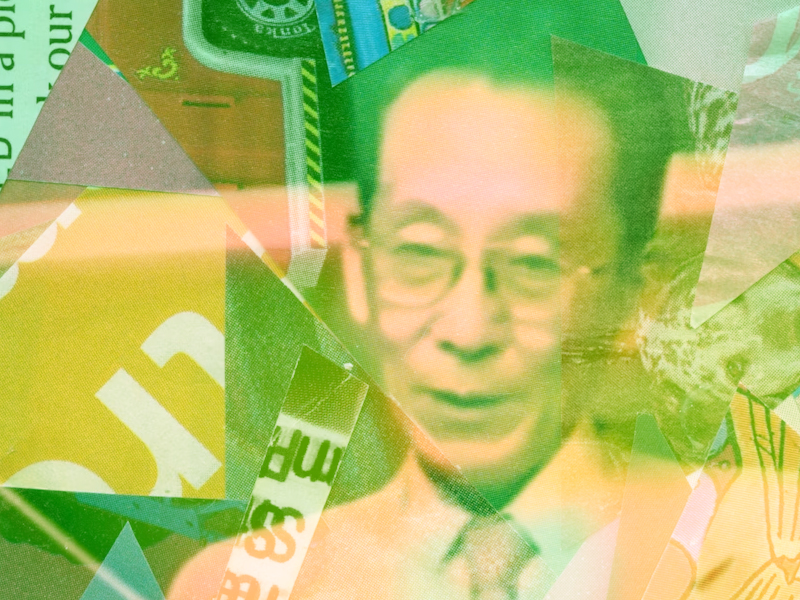
Long before Michio Kushi popularized the healthy food lifestyle of macrobiotics, the Bible, penned by its various authors directly inspired by God, first described the foundational principles of a healthy diet. The Bible also shows that what we eat directly affects our physical and mental well-being. While Kushi importantly contributes to a healthy dietary lifestyle that supports vitality and a long life, his emphasis on his framework essentially restates the dietary disciplines outlined in Scripture.
A central twentieth-century figure in this movement, Michio Kushi (1926–2014) was an important Japanese educator dedicated to advocating macrobiotics. Macrobiotics is a restrictive diet (Wikipedia, n.d.). Importantly, it is contrary to today’s mostly over-processed, over-the-counter unhealthy foods we find in most supermarkets. Kushi’s teachings propose that proper nutrition is the foundation of all human physical and mental health (Clean Eatz Kitchen, 2026; Kushi et al., 2004). According to Kushi’s teachings, removing fast food and ultra-processed foods is essential for a long, healthy life (Kushi Archives, n.d.). Kushi’s core belief was that human health is directly related to the daily dietary choices we make. According to Kushi, most modern illnesses stem from a departure from natural, minimally processed food sources (Clean Eatz Kitchen, 2026; Kushi et al., 2004).
Kushi’s approach proposes a highly regimented diet that is designed to align human physiology with natural balance (Clean Eatz Kitchen, 2026). Using Eastern concepts, Kushi categorized foods based on their energetic properties. He also argued that seasonal availability matters in the selection process and that the biological impact of a natural ingredient on the human body plays a key role in dietary choices (Kushi Archives, n.d.). Kushi’s standard diet plan proposed that 50% to 60% of daily food be whole cereal grains (primarily short-grain brown rice, barley, and oats). Then, 20% to 30% of the diet should be locally grown organic vegetables. Finally, 5% to 10% of the diet should be legumes and sea vegetables (Clean Eatz Kitchen, 2026; Kushi Archives, n.d.; Wikipedia, n.d.). Kushi believed that minimizing refined sugars, dairy, ultra-processed products, and meat was key to a healthy diet and a long life (Kushi Archives, n.d.; Wikipedia, n.d.).
Kushi emphasized that daily nutrition is not merely fuel, but a fundamental part of the biochemical and energetic processes in our bodies (Kushi et al., 2004). Through his publications, including The Book of Macrobiotics and The Cancer Prevention Diet, Kushi believed that chronic metabolic and degenerative diseases could be prevented by instilling macrobiotic eating habits that are counter to most contemporary meal plans (Horowitz, 2002; Kushi et al., 2004). To make macrobiotics accessible to everyday households, he and his wife, Aveline, founded the Erewhon Trading Company to distribute natural whole grains and sea vegetables, and the Kushi Institute to train lifestyle counselors and culinary educators (Wikipedia, n.d.).

While Kushi’s ideas have gained significant public support and helped develop the organic/health-food movement, Kushi was not the first to teach the importance of caring for your body by eating healthy foods. Not surprisingly, God, in the Bible, spoke first on this topic. Although various authors such as Moses, King Solomon, Daniel, and the Apostle Paul spoke through the Bible, it was the first to address these topics. Here are selected areas of Scripture that have to do with diet and the value that God places on taking care of your body through eating a proper diet:
- Genesis 1:29: This verse describes how God originally gave Adam and Eve, the first people, a diet consistent with nutrient-dense plants. Apparently, in our original design, it appears vegetables and plants were meant to be our only source of nutrition. However, after the fall, when Adam and Eve sinned, mankind began eating animal meat, and although meat is an important part of our diet, it should not be our main food group. On the topic of eating primarily plant-based foods, the Bible says in our original design: “And God said, ‘Behold, I have given you every plant yielding seed that is on the face of all the earth, and every tree with seed in its fruit. You shall have them for food.'”
- Leviticus 11 & Deuteronomy 14: These verses distinguish between clean and unclean foods. In the Bible, Moses, under God’s direct guidance, forbids the Israelites to eat blood, certain animal fats, and scavenger and carnivorous animals (Leviticus 3:17, 11:1–47). While these laws carried ceremonial significance, they also protected people from pathogens, foodborne illnesses, and toxins prevalent in certain animal species. Although these food items remain forbidden to the modern Orthodox Jewish practitioner, everyone would benefit from adopting these eating habits.
- 1 Samuel 14:27–29: King Saul’s son Jonathan was faint and exhausted from battle. He dipped his staff into a honeycomb and ate it, and the Bible notes that his physical strength was immediately renewed and “his eyes brightened”.
- Proverbs 25:16, 27: Advocates for moderation, specifically using honey as an example: “If you find honey, eat just enough—too much of it, and you will vomit.”
- Daniel 1:12, 15: Refusing the rich, highly processed royal delicacies and wine of Babylon, Daniel requested a ten-day test: “Please test your servants for ten days: Give us nothing but vegetables [pulse/grains/seeds] to eat and water to drink.” At the end of ten days, they appeared healthier, stronger, and more well-nourished than those eating the king’s rich table.
- 1 Corinthians 6:19–20: “Do you not know that your bodies are temples of the Holy Spirit within you, whom you have from God? You are not your own… So glorify God in your body.”
- 1 Corinthians 10:31: This verse emphasizes the importance of being selective about everyday eating habits. On this topic, the Bible says: “So, whether you eat or drink, or whatever you do, do all to the glory of God.”
You see, Kushi’s teachings are really a restatement of the teachings found in the Bible. The Bible was the first source to confirm the importance of being selective with what we put in our bodies. God, the originator of all life, knows what is best for our bodies.
Nevertheless, giving credit where credit is due, both frameworks reject viewing food as only for gratification, but elevate daily eating to a conscious act of stewardship, discipline, and respect for our bodies. The Bible also instructs us that food can be a unique source of energy. In fact, as noted above, in 1 Samuel 14:27–29, when King Saul’s son Jonathan was faint from battle, he ate honey and “his eyes brightened.”
The primary importance of eating the right food is that your body is a temple of the Holy Spirit. Therefore, we need to do more than care for it from a stewardship perspective; we need to fill it with the right foods. This is where Kushi’s teachings are very valuable, as it is important to remember that our bodies should not be nourished with over-the-counter ultra-processed foods (Kushi et al., 2004).
References
Clean Eatz Kitchen. (2026). What is the Kushi diet? Macrobiotic eating explained. Clean Eatz Kitchen.
Horowitz, J. (2002). The macrobiotic diet as treatment for cancer: Review of the evidence. Journal of Alternative and Complementary Medicine, 8(1), 49–59. https://doi.org/10.1089/107555302753507177
Kushi, M., Blauer, S., & Esko, W. (2004). The macrobiotic way: The definitive guide to macrobiotic living (3rd ed.). Avery / Penguin Random House.
Kushi Archives. (n.d.). Kushi macrobiotic dietary recommendations & principles. Scribd.
Wikipedia. (n.d.). Macrobiotic diet. Retrieved March 30, 2026, from https://en.wikipedia.org/wiki/Macrobiotic_diet
