
These publications explore the intersections of human expression, identity, modern society, and theology. Framed by my background in visual art and my graduate studies in education, this work has several distinct thematic categories:
- Visual thinking: With my background as a visual artist, I have a fascination with visual thinking, which involves organizing ideas and information through imagery. This curiosity naturally led me to explore emojis and how users perceive them, particularly in the context of developing effective visual communication methods.
- The artist’s way: As an artist, I am interested in how artists navigate life’s complexities. Research in this track explores the creative process and how artistic individuals approach life’s challenges.
- Celebrating neurodiversity: I also aim to raise awareness of the unique strengths and perspectives that neurodiverse individuals bring to the world. This research celebrates the beauty and value of all people, including those with disabilities. Writing in this category is also rooted in our intrinsic value as image bearers of God. For we are all made in God’s image and therefore all have value.
- Technology and Theology: Given the prevalence of technology in our world, I often write about it from a Christian theological perspective. I am very upfront about my trepidation towards the integration of technology into the human body, because the body is a temple to the Lord and the Lord alone (1st Corinthians 6:19-20). Regarding technology, I assume in my writing that we are nearing a point of innovation at which it will be used to activate the Mark of the Beast (Revelation 13).
Example research and viewpoint articles:
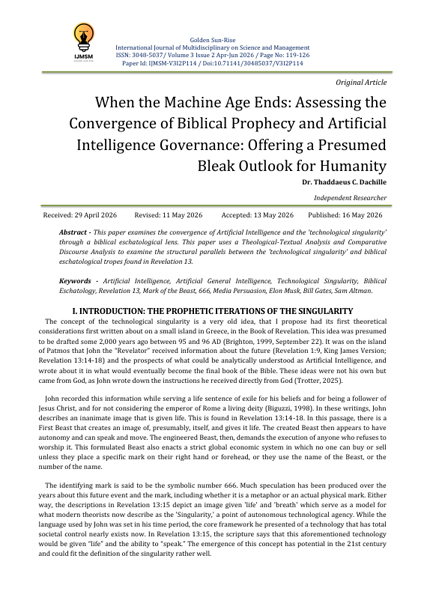
This paper uses a Theological-Textual Analysis to argue that the technological “singularity,” the point where artificial intelligence surpasses human control and achieves true autonomy, was first predicted 2,000 years ago by John on the island of Patmos and described in the Book of Revelation.
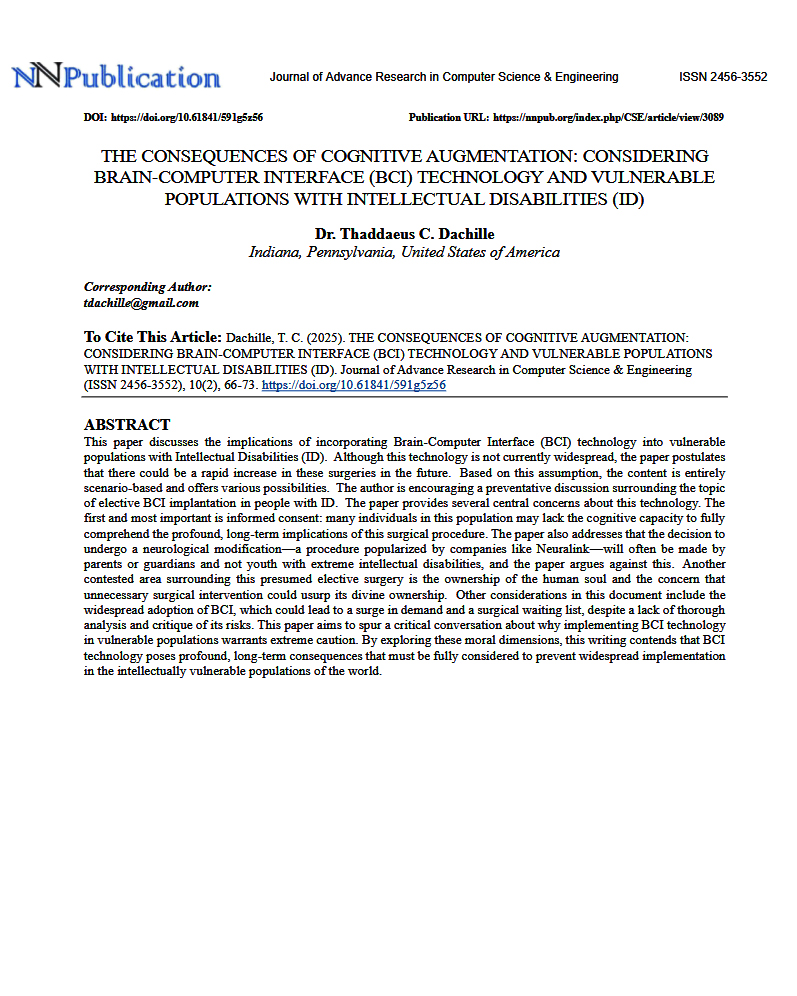
This paper provides a discussion regarding the elective implantation of Brain-Computer Interface (BCI) technology in individuals with intellectual disabilities. In the paper, I display my beliefs, noting the obvious spiritual risk of this elective surgery, and argue that the “divine ownership” of the human soul is not ours, but the Lord’s.

This writing is a book chapter that explores portfolio assessment in undergraduate education, offering practical guidance for students and instructors.
Link:
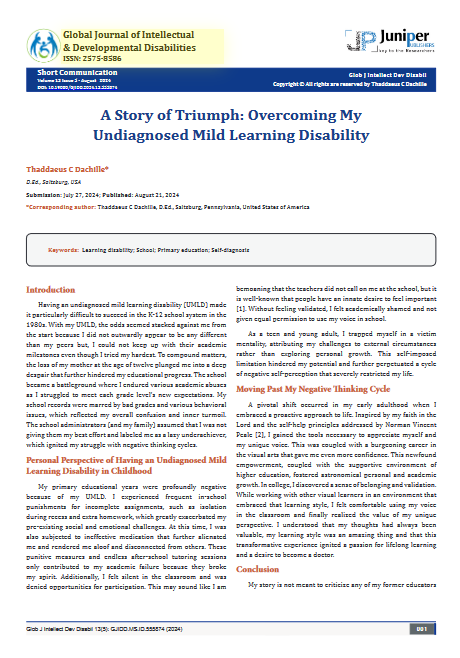
This writing describes my childhood struggles with an undiagnosed learning disability. The personal learning journey described in this writing is filled with challenges, but each step forward offered me a profound accomplishment that required resilience, determination, and a willingness to embrace my unique learning style. The sense of achievement from mastering a skill or concept that once felt insurmountable is incredibly empowering. I wrote this article to offer hope and encouragement to others struggling with self-acceptance and being themselves in a world where they think they cannot measure up to their “neurotypical peers.”
Link: https://juniperpublishers.com/gjidd/pdf/GJIDD.MS.ID.555874.pdf
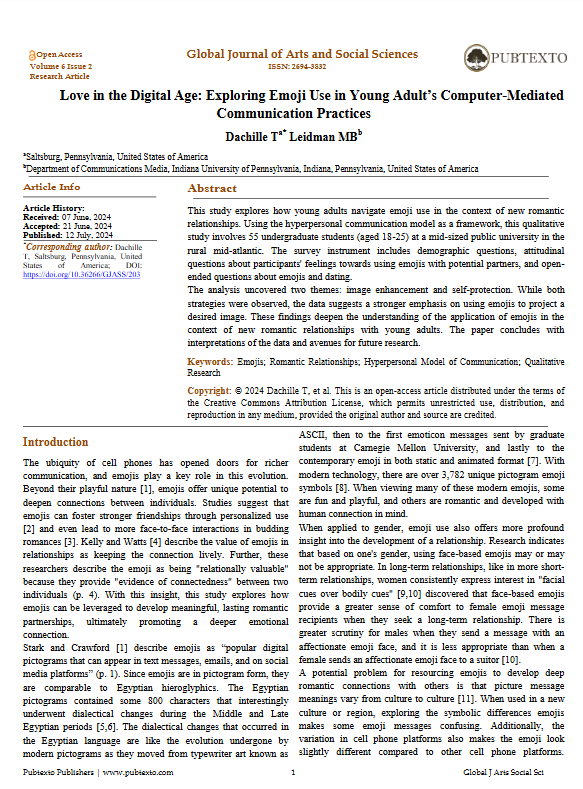
The study explores how young adults navigate emoji use in the context of new romantic relationships. The qualitative study involves 55 undergraduate students (aged 18 -25) at a mid-sized public university in the rural mid-Atlantic.
Link:
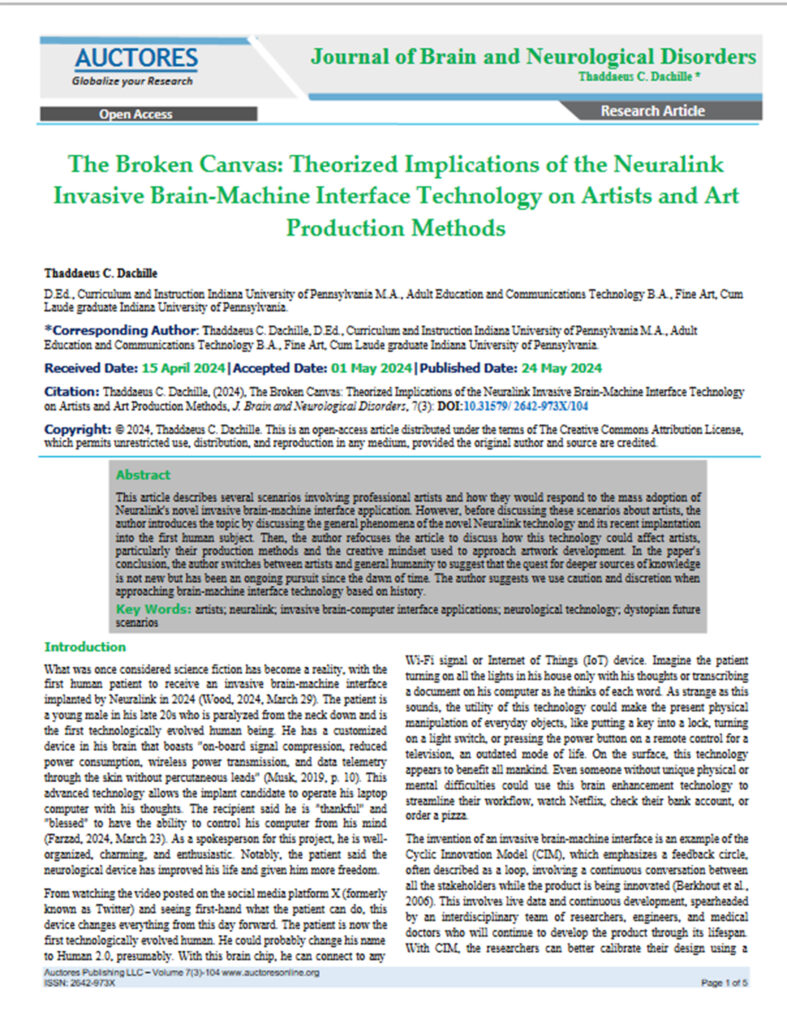
This article discusses various scenarios involving professional artists and their potential response to the widespread adoption of Neuralink’s innovative invasive brain-machine interface technology.
Link: https://www.auctoresonline.org/uploads/articles/1716611290JBND-24-RA-104_Final_Galley_Proof.pdf
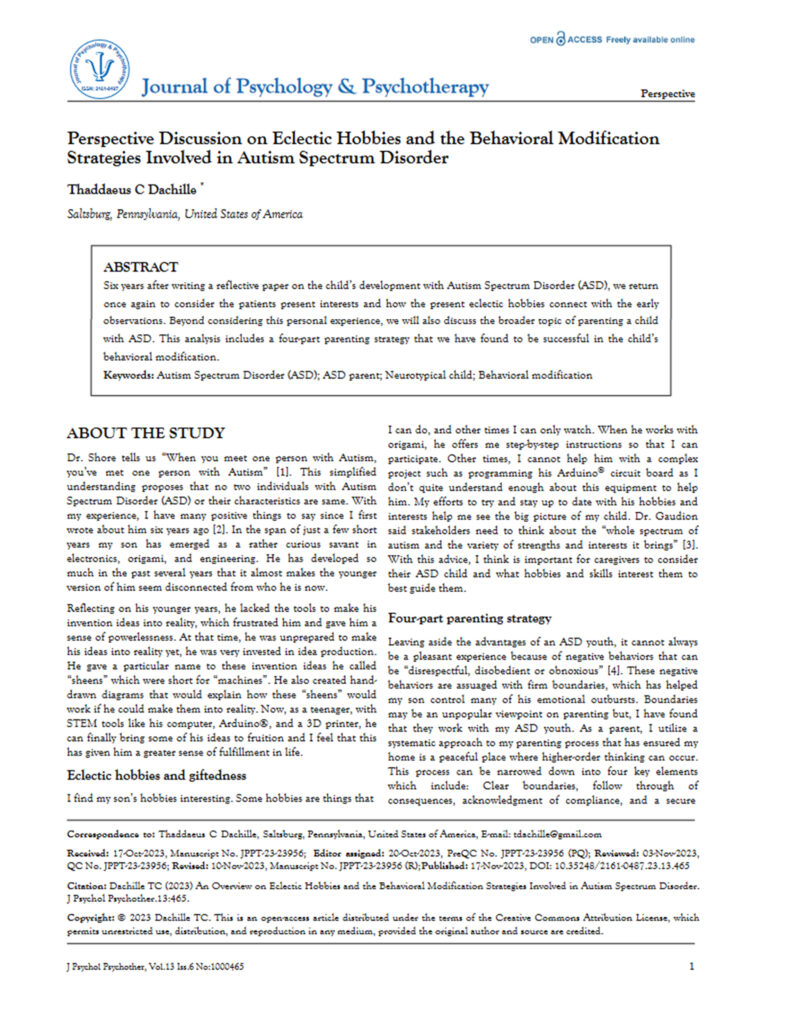
The paper delves into the challenges of parenting a child with Autism Spectrum Disorder (ASD) and introduces a four-part parenting strategy proven to be effective in behavioral modification.
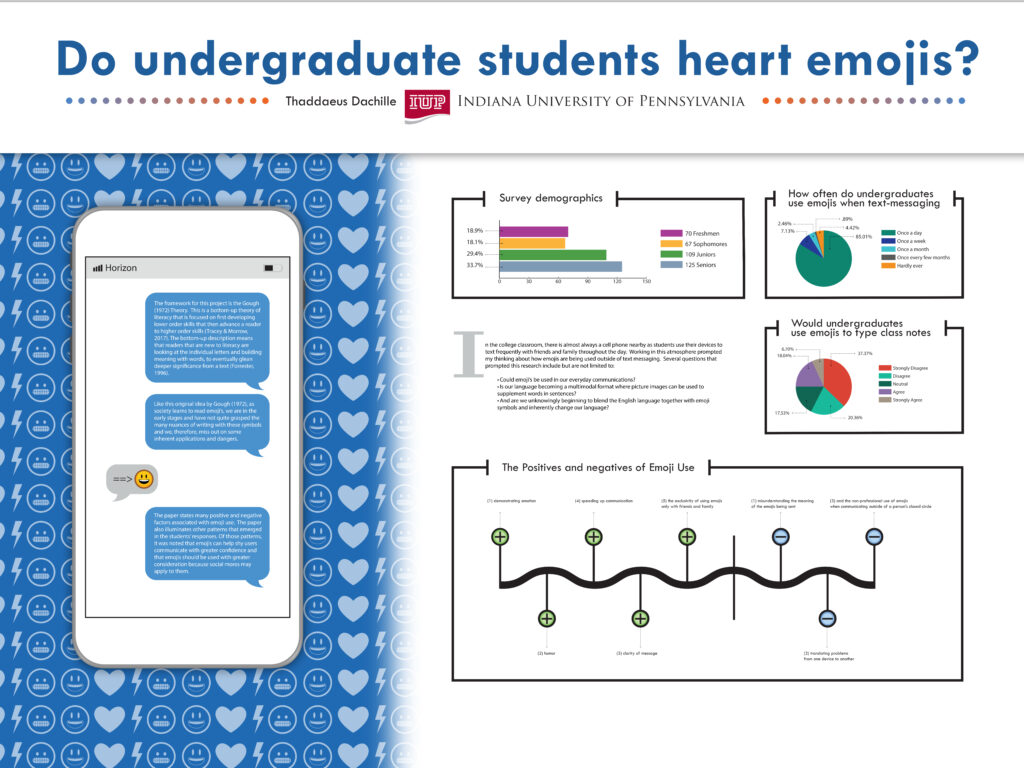
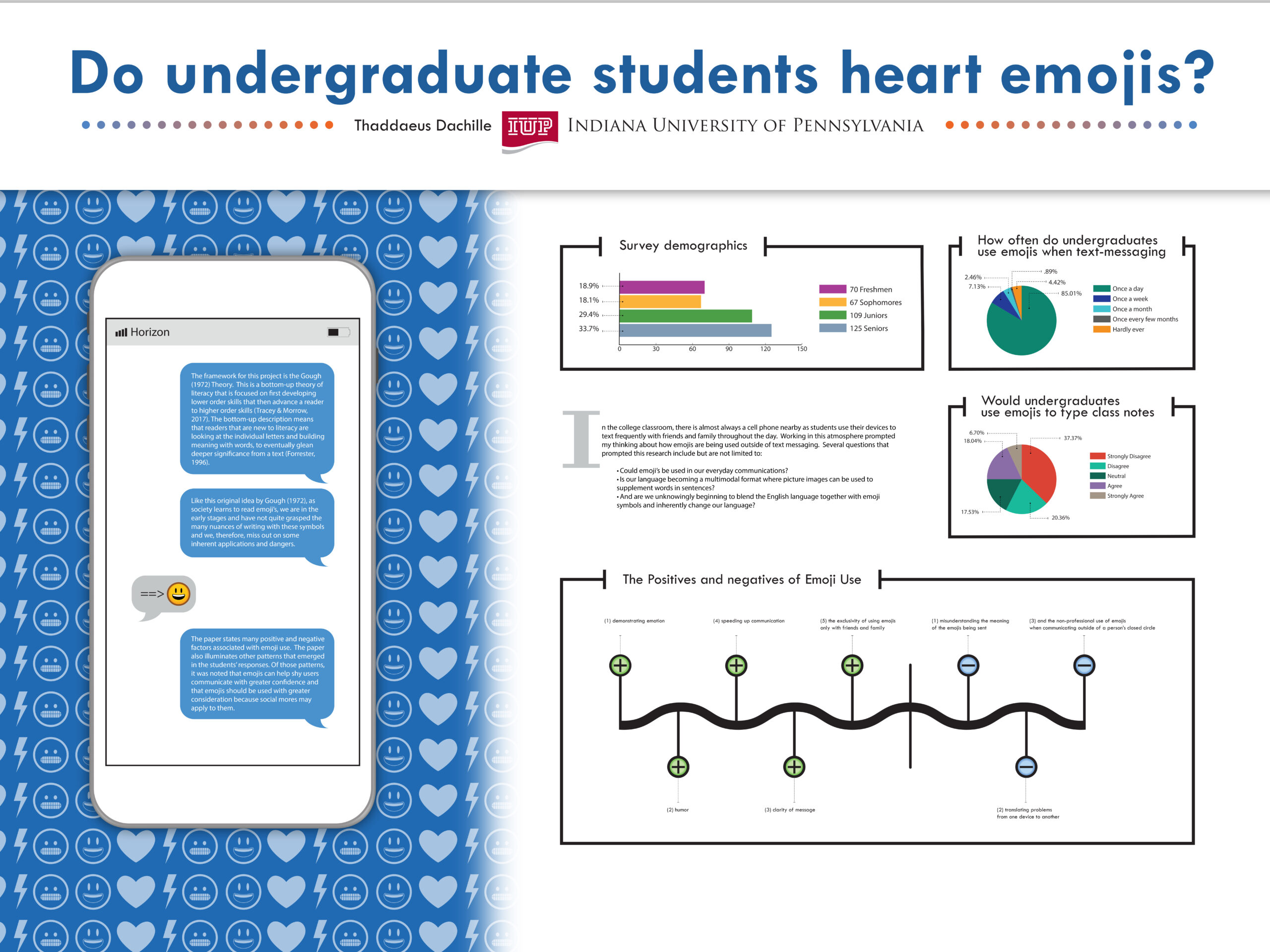
This research poster on emoji usage was presented at the International Communication Conference in Washington, D.C. in the spring of 2019. The presentation provided an overview of the results obtained from a survey of 371 college students regarding their perceptions and attitudes toward the use of emojis. Click on this text link to view a larger version of the poster.
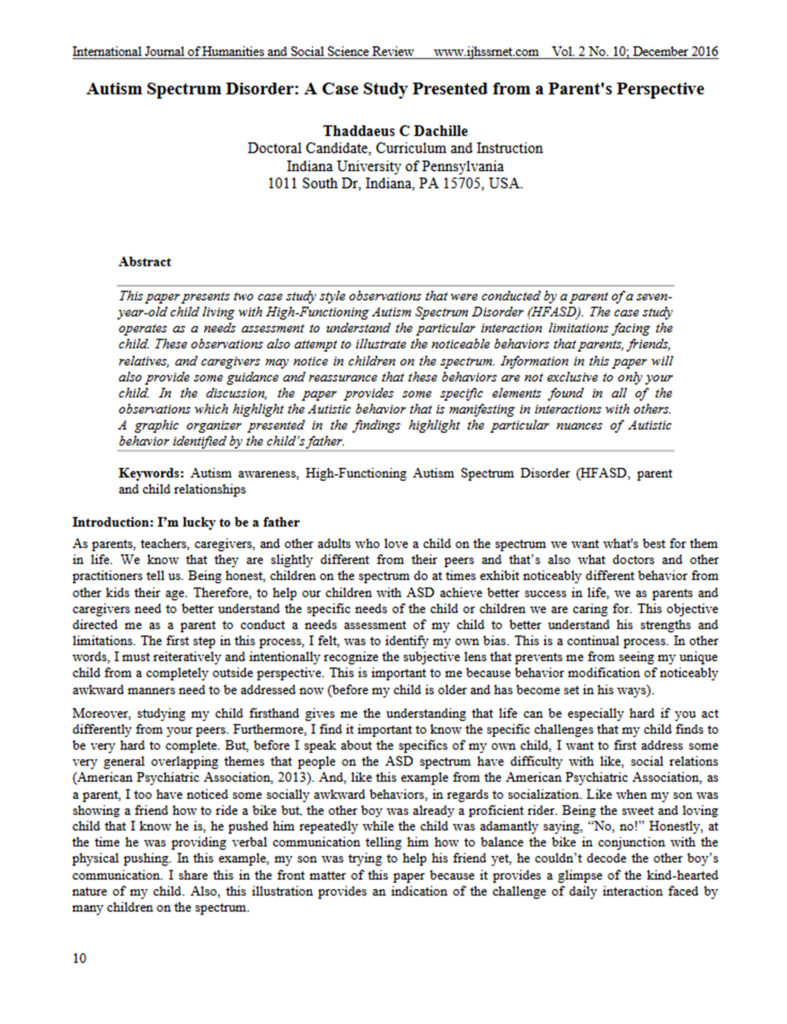
This paper presents two case study-style observations of a seven-year-old child with High-Functioning Autism Spectrum Disorder (HFASD). The case study operates as a needs assessment to understand the particular interaction limitations facing the child.
Link: https://papers.ssrn.com/sol3/papers.cfm?abstract_id=2898474
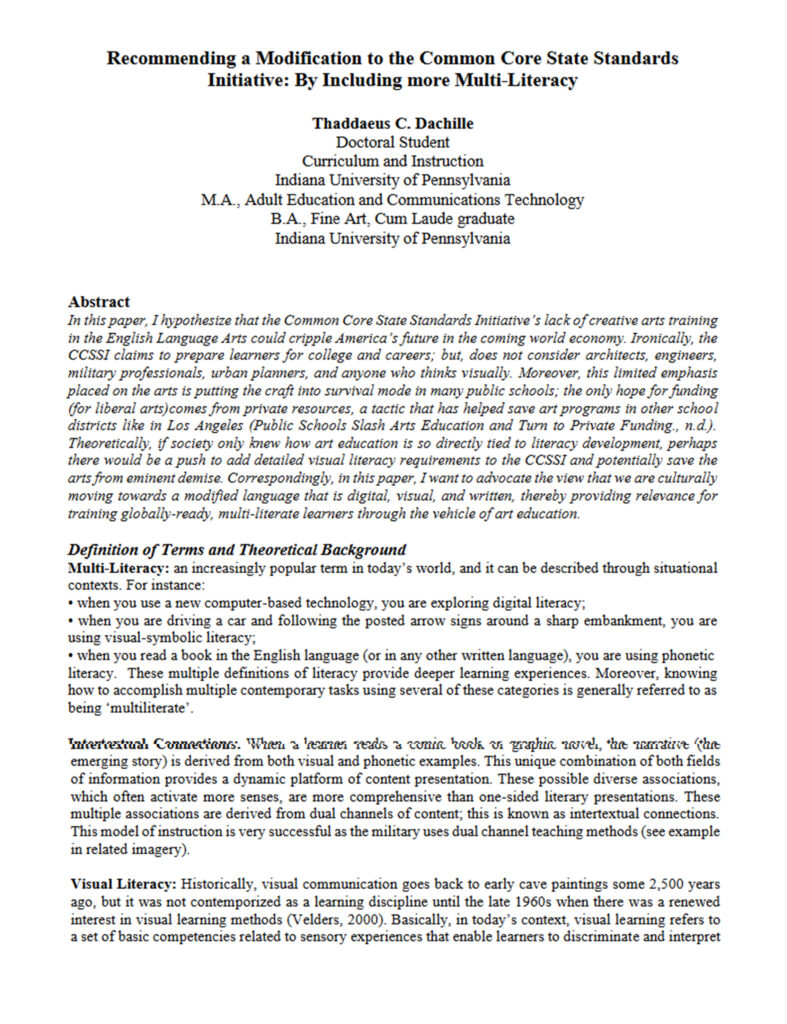
This viewpoint paper critiques the potential drawbacks of benchmarking in education. The paper presents the argument that standardized practices often prioritize subjects other than creative arts, potentially hindering the development of critical skills like adaptability and creative thinking – qualities essential for America’s future success.
Link: https://papers.ssrn.com/sol3/papers.cfm?abstract_id=2893655