

What is the point of life? We all sleep, eat, wake up, and go about our day, only to do the same thing the next day, much like the movie Groundhog Day. If you have not seen this film, you really should; it’s worth watching. The picture features a “Phil Connors,” played by Bill Murray, an arrogant Pittsburgh TV weatherman sent to cover the annual Groundhog Day festival in Punxsutawney, Pennsylvania (IMDb, n.d.). In the story, Connors is constantly trapped in a loop, forced to relive the same 24 hours over and over, while everyone else remains unaware of the looping time. I think that, like the movie, every day can seem the same and, by extension, drain the purpose we should feel in this life to zero. Life can feel purposeless when we experience one constant loop of unending, uninterrupted, and mundane time.
The monotony of life and the confining, enclosed communities we surround ourselves with, as in Groundhog Day, can be difficult to bear. If you have ever felt this way, too, you are not alone. I think that a lot of these circumstances we find ourselves in lead us towards feeling a looming sense of anxiety. According to the World Economic Forum Global Risks Report 2026, uncertainty is at an all-time high, surpassing previous levels (World Economic Forum, 2026, January 14). The report itself has a dark, brooding cover featuring the Earth on a cliff about to fall. Overall, the publication’s cover and message are unpleasant. The report gleefully promotes despair and hopelessness as something to look forward to. We know that anxiety and depression are also on the rise these days. Moreover, it is neither good nor should it be cheered on, as the WEF has recently done, which only contributes to the pointlessness many feel in this life.
A lot of the emptiness people are experiencing now may also stem from being constantly told that machines will replace them. Specifically, the rise of artificial intelligence (AI) has removed purpose from people’s lives because many careers can now be easily replaced (Lowrey, 2024, June 3). Jobs have historically given many people a reason to live, a sense of purpose, and a way to contribute to the world.
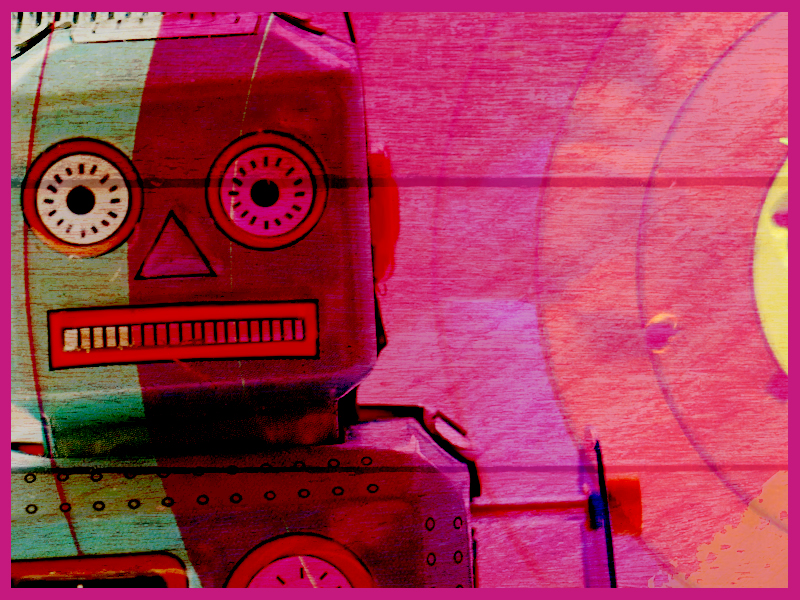
When someone, or society as a whole, is constantly being told they are replaceable by artificial intelligence (AI), machinery, or someone else, it has a negative psychological effect. The constant devaluation becomes a form of chronic psychosocial stress, which has a physical effect on the Amygdala in the brain (De Witte,1999; Zhang et al., 2018). This “alarm system” becomes hyper-reactive. You stay in a state of “High Alert,” waiting for the next insult. Constant devaluation also impacts your Prefrontal Cortex. This area is responsible for logic and self-regulation. Under high levels of stress, it can “shrink,” making it harder to think clearly or regulate one’s emotions (Prefrontal cortex, 2024, February 15).
The world will drive you down and tell you that you have no purpose. It will tell you that you have no future, and whatever future you did plan on having will be replaced by a machine that is much more capable than you are! You are replaceable by AI, or there is always someone better just behind you, ready to take your place as soon as you are outdated. The constant threat of demotion and replacement is taking a heavy toll on society.
There is, however, one with a different perspective. The one has an entirely different viewpoint of who you are and what you are capable of. He is God. He has a plan and a future for you!
God’s only son, Jesus, very clearly tells us in this life we will have troubles (John 16:33). There is no doubt about it, this life can be hard. But He says that He will guide and protect (Proverbs 3:5-6) and “lead us beside still waters” (Psalm 23). When everything seems hopeless, He has an opportunity in store for each of us. The guidance He offers is, “plans to prosper you and not to harm you, plans to give you hope and a future” (Jeremiah 29:11). With Him, there is a hope and a future; without Him, it is a vapid existence. A life lived without Him has no guidepost, no bearing, and no reason. Empty. Most poignantly, a life without Him is no life at all.
Concluding Thoughts
The choice we face is between two competing narratives. The worldly perspective promotes an overall depreciation of opportunity as machines replace more and more people. The anxiety levels are ever-increasing, and fear is always mounting in the looming and negative future filled with bleak opportunities and surefire disappointment. The devaluation faced is there if you choose the world. However, it cannot compare to the clarity, hope, love, and purpose offered by God. To find a way out of this loop, recognize that our value is not determined by our utility and efficiency but by the value we have in Christ Jesus.
By shifting focus from the negative reports of global uncertainty to the promises of hope found in Christ Jesus, we can recalibrate our internal compass. The “chronic psychosocial stress” that shrinks our mental acumen can be countered by the resilience and perspective of “Shalom” that transcends this life. This is not passive optimism but an active approach to victory in this life. To not lean on our own understanding, bombarded by messages and fear, we find a path made straight by Him. Make the jump today if you have not already, and choose Christ!
The world can feel incredibly heavy. If you are struggling to find a reason to keep going, please reach out. You can send me a message directly with this link. If things are urgent, please don’t hesitate to connect with the 988 Lifeline. There is no shame in asking for help. We all need it from time to time.

References:
De Witte, H. (1999). Job insecurity and psychological well-being: Review of the literature and exploration of some unresolved issues. European Journal of Work and Organizational Psychology, 8(2), 155–177.
IMDb. (n.d.). Groundhog Day (1993). https://www.imdb.com/title/tt0107048/
Lowrey, A. (2024, June 3). America isn’t ready for what AI will do to jobs. The Atlantic.
Prefrontal cortex. (2024, February 15). In Wikipedia. https://en.wikipedia.org/w/index.php?title=Prefrontal_cortex&oldid=1207654321
World Economic Forum. (2026, January 14). The Global Risks Report 2026 (21st ed.).
Zhang, X., Ge, T. T., Yin, G., Cui, R., Zhao, G., & Yang, W. (2018). Stress-induced functional alterations in amygdala: implications for neuropsychiatric diseases. Frontiers in neuroscience, 12, 367.
挺不错的样子嘛!
非常感谢你!希望你有美好的一天,也感谢你访问我的网站!